Chapter I: Inva̤loû and Frona̤
Twilight’s gray, mysterious shadows enveloped as with a dusky veil one of the loveliest suburbs of Lēonita Tylû. Overhead the lamps of Astranola̤ (home of Deific Ones) gleamed downward through fleecy, flying clouds, which thinly veiled their sacred fires. From off the bosom of Lake Shaman, whose rippling waves softly kissed its pebbly shore, floated the sweet strains of Zoita̤ (stringed musical instruments), accompanying the voices of youths and maidens who sang a tender love song. From out the branches of some great Bûda̤s trees, embowering a stately residence near the lake shore, cooed the soft, plaintive, quavering notes of a Zyma̤ (dovelike bird, yet larger), whose evening song ever awakens tenderest emotions and memories. On either side of the residence beautiful fountain groups threw into the quiet air their silvery spray, which returned to great white marble basins with the pattering, soothing sound of gently falling rain. From out the hearts of myriad blooms, the breaths of the wandering breeze drew their subtle fragrance to be borne as a sweet night offering to the gentle goddess Nûya̤, whose life-giving touch had called them into beauteous expression.
As twilight deepened into night, save for the rustling of the whispering leaves of the towering Bûda̤s trees there was unbroken silence. Suddenly, from out the stillness, came the sound of swiftly running feet; and a moment later, hand in hand, the forms of a boy and girl like flying shadows sped towards a nearby temple, whose brilliant lights poured their radiance into the outer darkness, which yet was not deep enough to quite obscure the pallid beauty of the admirable architecture and exquisitely sculptured exterior of the sacred edifice.
As they neared the temple the boy, Inva̤loû, breathlessly whispered: “Oh, Frona̤, I fear we are late for the offering and the High Priest will be angry with us,—and, Frona̤ dear, it is my fault. I am very sorry, Frona̤. Say that you forgive me, Frona̤, and I will never again behave so foolishly.”
Frona̤ said not a word but clasped closer the trembling hand of the boy, and a moment later they hastily entered an apartment at the rear of the temple, where were assembled the offering bearers laden with grains, fruits and flowers.
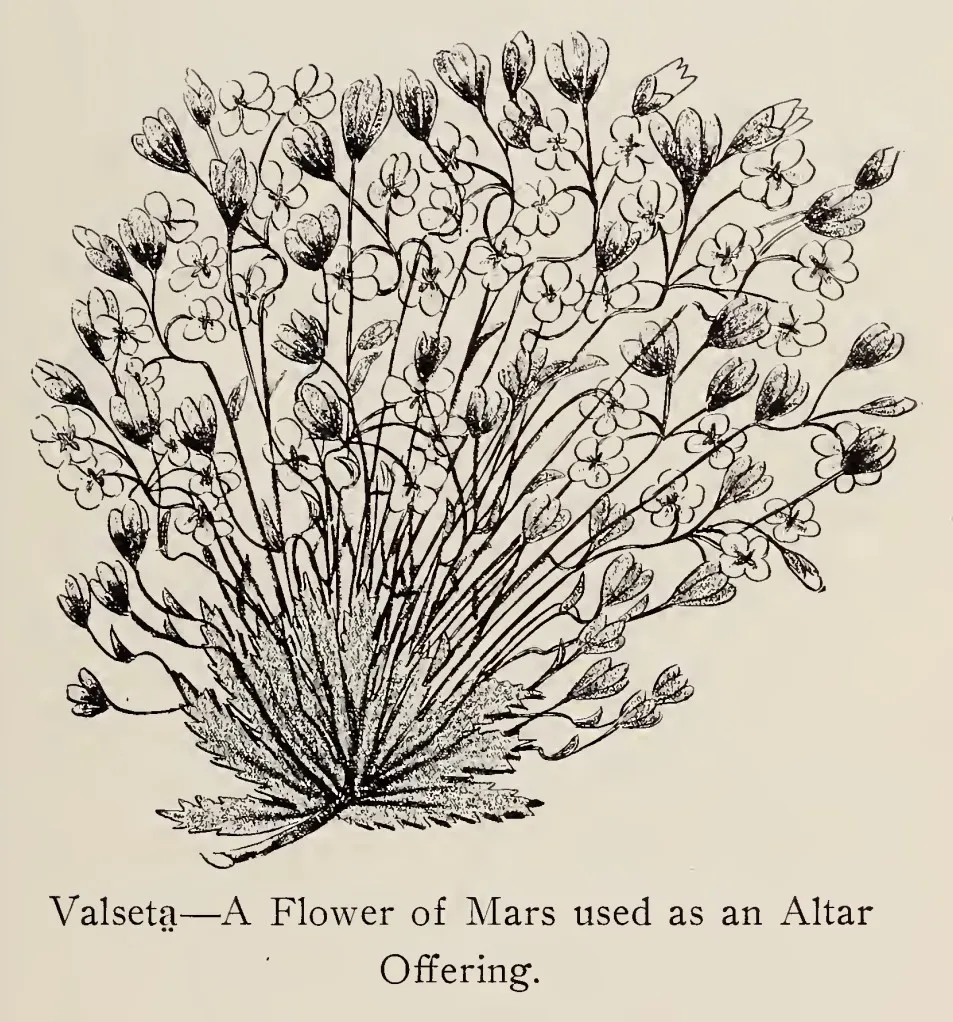
As the two tardy ones entered the apartment they observed in the glances of their companions an expression of sympathy and alarm. They quickly placed themselves in position in the procession, standing with downcast eyes and abashed faces under the peculiar scrutiny of the High Priest. Presently three strokes of the temple bell broke the painfully embarrassing silence; then the High Priest said, “Inva̤loû, Frona̤, you will remain where you are until I return.” Again the silvery tones of the temple bell pealed out. Noiselessly the temple doors moved aside. The High Priest entered and moved towards the altar, its white sculptured beauty towering to the great dome through whose transparent red and golden Dia̤fon ēvoiha̤ (dwelling place of Gods) the swiftly flying Moon, Entola̤, threw beams of faint effulgence. Softly the strains of the Voûhoida̤ (very like a pipe organ) broke the stillness; and, as its vibrant tones, accompanied by the intoning voices of the singers, filled the temple with sweetest melody, the offering-bearers entered and with slow rhythmic movements drew near the altar, arranging themselves on either side of the High Priest Zeydon Gamala̤. As the attendants removed the offerings of the previous day the children replaced them with golden grains, fruits, and the red and yellow blooms of the sacred Tsonia̤ and Valseta̤.
Among the throng of worshippers were the parents of Inva̤loû and Frona̤, who soon perceived that their children were not among the offering-bearers. Quickly their eyes were filled with surprise and their loving hearts with a nameless dread lest some evil thing had befallen their darlings, their Inva̤loû and Frona̤.
As all Entoans well know, it is not permissible that any one shall enter or depart during the ministry of the sacred functions of the temple; but as the service proceeded the alarm of the parents of the absent ones increased; and as the last Ra̤û was pronounced and the procession, preceded by the High Priest, passed from the rear of the temple, they hastened towards their home, where, to their great dismay, they learned that their children had gone to the temple prepared to take their allotted part in the evening service to the goddess Fryda̤s,—she whose quickening breath woos into perfection grains, fruits and flowers, and whose lamplight now gleamed and twinkled in the far-off night sky.